
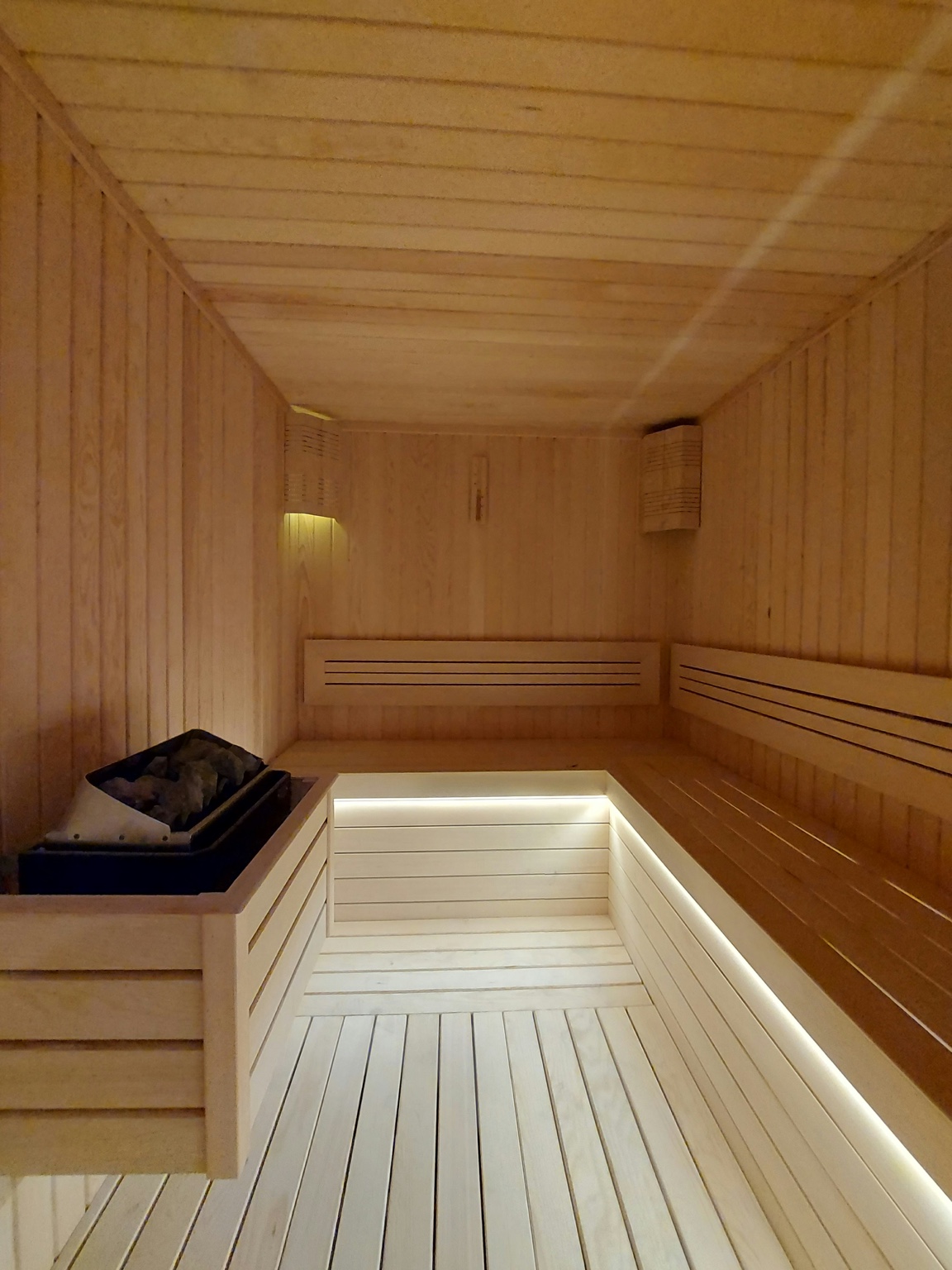
Quick verdict: Read this before trusting capacity labels. Room fit, clearance, and comfort matter more than the label alone.
Jump to
How Much Space Do You Need for a Home Sauna?
The space question is bigger than the listed footprint. Buyers often measure the box and forget about access, door swing, clearance, ceiling feel, and the simple fact that a “2-person” sauna is not always comfortable for two adults.
The better way to think about space is not, “Can I technically fit this?” It is, “Will this sauna actually work in the room or part of the property where I plan to live with it?”
Quick answer: how much space do you really need?
A small home sauna can fit in less space than many buyers expect
This is why compact indoor units are such a common starting point.
A comfortable setup needs more than the product footprint alone
Clearance, access, and room feel matter almost as much as the stated dimensions.
Listed capacity is often more optimistic than real-life comfort
Especially in smaller indoor models.
What “space” actually means when shopping for a sauna
Footprint
The base dimensions still matter, but they are only the starting point.
Door swing and access
If getting into or around the sauna feels awkward, the room fit is worse than it looked on paper.
Walking clearance
A sauna that technically fits but dominates the room can still feel like a mistake.
Ceiling and room feel
Visual bulk matters more than buyers expect.
How the sauna fits the room around it
You are not just buying a sauna. You are changing the room.
Indoor home-sauna sizing reality
What 1-person indoor saunas are really like
Often the smartest answer for buyers with tight rooms and realistic solo-use needs.
Why many 2-person models are tight for two adults
A lot of them make more sense as roomy 1-person or compact shared-use saunas.
Best room types for indoor placement
Spare rooms, basements, and home gyms usually work better than trying to squeeze a sauna into a room that already struggles for space.
Floor surface and ventilation still matter
The room has to work with the sauna, not just contain it.
Outdoor sizing reality
You need more than the footprint
The surrounding site matters.
Access path and assembly space matter
Especially with bigger units and kits.
Placement buffer matters too
Outdoor ownership gets much easier when the sauna is not shoved into a bad location.
Site prep can change the plan
This affects both the cost and the practicality of the whole purchase.
Capacity claims vs real comfort
Why listed capacity can mislead buyers
Capacity labels often describe technical occupancy, not a comfortable long-term use case.
What “2-person” often means in practice
Usually snug for two, better for one plus occasional second-user flexibility.
Shop for comfort, not just labels
This is one of the easiest ways to avoid a purchase that feels smaller every time you use it.
Best sauna paths for small spaces
1-person saunas
Often the best answer when the room is genuinely tight.
Compact indoor infrared models
Still the strongest category for small-space indoor use.
Buying smaller on purpose
A compact sauna that gets used regularly is better than a bigger one that overwhelms the room.
Knowing when the room still is not a good fit
Some rooms are technically possible but practically annoying. That difference matters.
Common space-planning mistakes
Measuring the footprint only
Ignoring door swing and clearance
Assuming a spare room automatically works
Trusting the person-count label too literally
Not checking space and electrical reality together
Bottom line
The right amount of space for a home sauna depends on more than the listed dimensions. A smaller sauna that fits naturally and gets used regularly is usually a better buy than a larger one that overwhelms the room or property. The best space decision is the one that makes day-to-day feel natural instead of forced.